
As winter settles in, staying warm becomes more than a matter of comfort—it’s a key part of health and safety, particularly for older adults. Changes in circulation, body-fat distribution, and regulation of body temperature make seniors more vulnerable to the cold. Fortunately, with a bit of planning and a few smart adjustments, you can stay cozy without turning your heating bill sky-high. Here are some practical, budget-friendly tips tailored for seniors (and anyone helping them).
1. Heat smart—keep your home comfortably warm, but efficiently
- Experts recommend keeping your indoor thermostat at around 68 °F (20 °C) or higher for older adults. Lower temperatures can increase the risk of hypothermia even indoors.
- If you’re worried about cost, instead of cranking up the heat, focus on reducing heat loss: use weather-stripping on doors and windows, close unused rooms, draw curtains early.
- Avoid inefficient habits like turning the thermostat very high expecting the room to warm faster—they don’t work and simply cost more. (This is a general energy-tip, but especially relevant for cost-sensitive seniors.)
- Use drafts as a signal: if windows or doors are letting in cold air, it will make the heating system struggle and cost more. A simple door sweep or draft-stopper can cut losses.
- Tip: Rather than heating the entire house fully, focus on the rooms you use most (living room, bedroom) and keep other spaces closed off when possible.
2. Dress in layers and cover up—even indoors
- Older adults often lose the insulating fat layer under their skin and may have reduced circulation, which means they feel cold more easily.
- The layering principle is key:
- Base layer: a lightweight thermal or moisture-wicking fabric (avoid heavy cotton next to skin when you might sweat).
- Middle layer: something insulating like fleece or wool.
- Outer layer (indoors): a snug cardigan or vest to trap warmth.
- Don’t forget extremities: warm socks (prefer wool or blends not cotton), slippers with good grip, perhaps gloves or fingerless mitts if hands get cold indoors, a hat or head covering for extra cold days.
- When sitting for long periods, keep a throw or blanket handy. Even a simple one helps reduce heat loss through the legs and body when you’re sedentary.
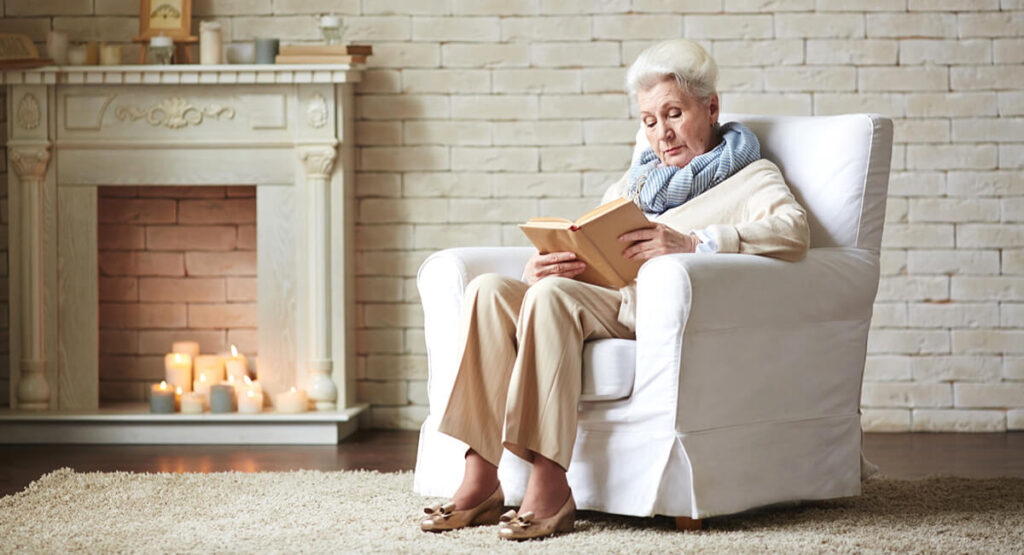
Tip: Keep a “warm corner” setup in your living room: a snug chair, blanket, small side-table for warm drink—so you can retire there without turning up the thermostat everywhere.
3. Make your space work for you (not against you)
- Seal up drafts, optimize your insulation, and use what you already have to improve warmth: thick curtains, rugs on bare floors, closing doors to unused rooms.
- Consider inexpensive “zone heating”—for example, if you’re spending most of your time in one room, make that room warmer and comfortable, while other rooms remain cooler.
- If you use a space heater, use it safely: keep it away from flammable materials, never run it unattended, and understand that it’s not a substitute for good insulation.
- Make sure you have working carbon monoxide and smoke detectors—especially if you use alternative heating sources, or fireplaces.
Tip: Put a draft-stopper or folded towel at the base of doors, close blinds/curtains at dusk, and open during sunny hours to let passive solar heat help.
4. Stay active, nourished & hydrated to help your body stay warm
- Movement helps circulation, which in turn helps your body generate and retain heat. Even gentle indoor exercises — chair stretches, walking laps in the hallway — make a difference.
- Warm foods and beverages let your body generate internal heat. Soups, stews, hot teas (unsweetened), oatmeal — all good. Also avoid heavy alcohol use, which can interfere with body’s heat regulation.
- Hydration matters even in cold months: you may not feel as thirsty, but dehydration can make you feel colder. Include warm drinks, herbal teas, or hot water with lemon.
- Review medications: Some medications (for blood pressure, diabetes, etc.) can affect your body’s ability to regulate temperature. Make sure your doctor is aware of how you tolerate cold.
Tip: Keep a thermal mug or flask filled with warm water or tea nearby. It provides comfort, warmth and helps with hydration without waiting for the kettle each time.
5. Prevent falls & safety risks associated with the cold
- Cold weather brings higher risks of slips, falls, and related injuries — which are more serious for seniors.
- Use non-slip footwear, keep walkways clear of snow/ice, install traction mats or handrails where needed. Outdoors and at entryways this is especially important.
- Recognize early signs of hypothermia: shivering, pale or cold skin, confusion, slow speech. Older adults may not feel very cold even when core temperature is dropping.
- Have a plan for power outages or heating failures: extra blankets, battery-powered light, a warm safe space to retreat to. Being prepared reduces stress and cost.
Tip: Keep a small “go bag” in the home: flashlight, extra blanket, warm socks, bottled water. If you know a storm or outage is coming, you’ll be ready.
6. Make use of community and cost-saving resources
- Many older adults are concerned about the cost of heating, but there are help programs (fuel assistance, community energy-efficiency programs) that can reduce both cost and worry.
- Check if your local utility or area agency on aging offers home-insulation or draft-proofing assessments—sometimes free or low cost.
- Stay socially connected. Being isolated can increase risk of delayed emergencies or poor heating decisions (e.g., turning down heat too far). A regular check-in from a friend or neighbour is a low-cost safety measure.
Tip: Contact your local senior centre or home-assistance community service and ask: “Do you have low-cost heating-efficiency programs for seniors?” It’s worth 10 minutes.
Conclusion
Winter comfort doesn’t have to mean overspending. For seniors, the focus should be on smart warmth— using layers, managing your home environment, staying nourished and active, and preventing risk. By combining these steps, you’ll stay snug, safe, and roll into spring without a shock when the heating bill comes.
Leave a Reply